A Whole Number Times A Fraction
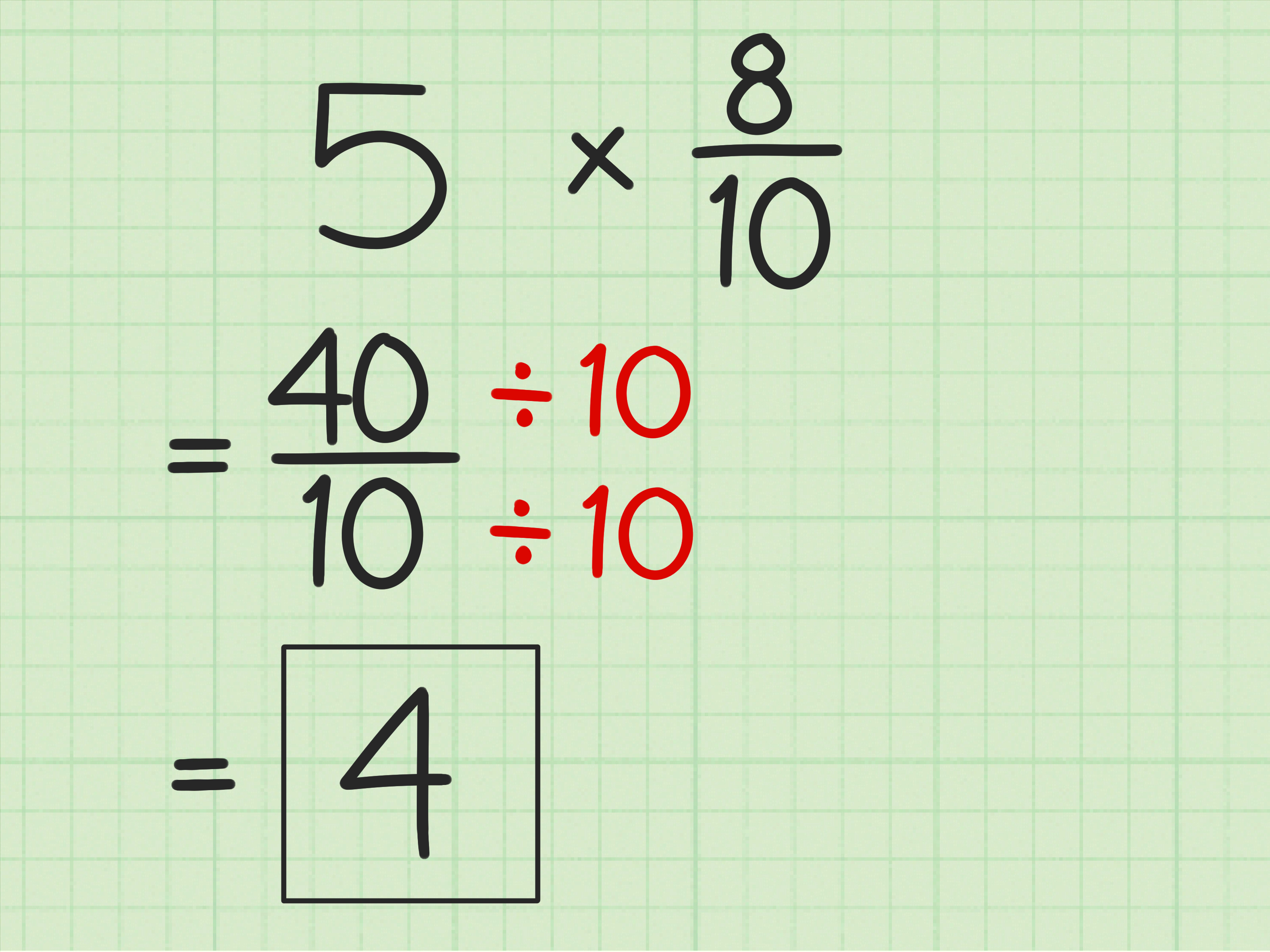
A Whole Number Times A Fraction. If a whole number or real number is multiplied with a fraction, then it is equal to the real number times the fraction is added. So, from our example, 6 becomes 6/1.
Every day we are presented with a myriad of numbers. We use numbers to keep track of time, numbers that count things and measure objects, numbers to indicate the amount of stuff we have and even numbers to create things. There are complex numbers, odd numbers in addition to Roman numerals. Numerological numbers are a rich tradition and are still in use in the present. Here's a few things to think about when thinking about these numbers.
Ancient EgyptiansDuring the 3rd and 4th dynasties ancient Egyptians experienced a golden age of peace and prosperity. It was a time of peace and prosperity. Egyptians believed in gods and believed in living in families and to worshipping the gods of the family.
Their culture of material was influenced by the Nile River. The Egyptians built massive stone structures. They also utilized the Nile for transportation and trade.
Egyptians had clothes that were easy and practical. They wore a sleeveless vest or a skirt of linen. The majority of them wore a necklace. Women would often paint their faces and nails. For men, false beards were worn as hairpieces. Lips were painted using the black pigment known as kohl.
Roman numeralsBefore the invention of the printing press, Roman numerals to represent numbers were written on surfaces or painted. The method of placing smaller numbers before the larger ones began to be popular throughout Europe.
There are two types of Roman numerals. One of them is for whole numbers and the other for decimals. The first type is a set made up of seven Latin words, each one representing the Roman numeral. Second is a series of letters that are derived from the Greek Tetra.
Unlike modern numbers, Roman numerals were never standardized. They had a wide range of usage across the entire period of ancient Rome in the medieval period. These are still employed in many areas, including IUPAC the nomenclature that is used for inorganic chemicals as well as naming the phases of polymorphic crystals, and in naming different tomes in multi-volume book.
Base-ten systemIn base ten counting, there are four main concepts. This is one of the most used numerical systems. It also serves as the foundation for place value numbers. It is useful for all students.
The basic ten scheme is based on repeated groupings of ten. Each group has its own place value, and the worth of a digit is based upon its position within the numeral. You can find 5 places in 10 groups, and the value of each number varies based on that of how large the group.
The base Ten system is a fantastic method to introduce the fundamentals of counting and subtraction. It is also a good way to test the knowledge of students. Students can subtract or add 10-frames with ease.
Irrational numbersThe majority of the time, irrational figures are real numbers that can't be written in ratios, fractions, or expressed as decimals. There are however exceptions. For instance the square root of a non-perfect square is an irrational number.
It was in the 5th century BC, Hippasus discovered irrational numbers. He didn't, however, throw them into the ocean. He was a member of the Pythagorean order.
The Pythagoreans believed that numbers that were irrational were mathematical errors. They also believed that irrational number were absurd. They mocked Hippasus.
It was the time of the 17th century when Abraham de Moivre used imaginary numbers. Leonhard Euler also used imaginary numbers. He also published the theory of Irrationals.
Additive and multiplication inverse of numbersWhen we use the properties that real numbers have and real numbers, we can simplify complicated equations. These attributes are based on concept of multiplication, addition and. When we add a negative number to a positive number you create a negative. Associative properties of the number zero is a useful property to apply to algebraic expressions. It's useful for both multiplication and addition.
The opposite of a numerical number "a" is also known as the reverse numbers "a." The additive of a number "a" will give a zero result when it is added to "a." It is also referred to as"signature change. "signature modification".
An excellent way to prove the associative property is to do so by moving numbers around in a fashion which does not alter the values. Associative property also valid for multiplication, division and division.
Complex numbersAnyone who is interested in maths should know that complex numbers are the sum of the imaginary and real elements of a number. These numbers represent a subset of reals and can be utilized in a many areas. Particularly complex numbers can be useful for calculating square roots and finding the negative roots of quadratic expressions. Additionally, they can be used for analysis of signals, fluid dynamics and electromagnetism. They are also utilized in algebra, calculus or signal analysis.
Complex numbers are naturally described by distributive and compmutative laws. One example of complex numbers is one that is z = I + X. The real portion of this number is illustrated by the complex plane. The imaginary part can be represented by the letter y.
If a whole number or real number is multiplied with a fraction, then it is equal to the real number times the fraction is added. Further supporting the second interpretation (that 3 x 1/5 is a grade 4 expectation, but 1/5 x 3 is a grade 5 expectation) is an earlier blog post where you stated, “a natural place. Multiply the bottom number of the fraction by the whole number.
Algebraically This Means, 3 X 1 4 = 1 4 + 1 4 + 1 4 = 1 + 1 + 1 4 = 3.
Multiply the bottom number of the fraction by the whole number. Converting whole numbers into fractions convert the whole number 72 into a fraction. A fraction is an amount that is not a whole number and a whole number is an integer without a fraction.
Welcome To Multiplying Whole Numbers And Fractions With Mr.
So, multiplying a fraction by a whole number is equivalent to adding the fraction for the whole number of times. Any whole number can be written as a fraction in this way. The product of numerator of a fraction and whole number divided by a denominator of a fraction.
Therefore, It Is Not Possible To Convert 7/8 To A Whole Number.
If you were to google “how to find a fraction of a whole number,” meaning you want to solve a problem such as find 1/3 of 12, you. The same thing can be said about dividing and multiplying by the reciprocal. 3 4 x 5 = ?
Convert 5 Into Its Fraction Form By Applying 1 In The Denominator.
Multiplication and division of fractions. 3/4 isn’t a whole number. Further supporting the second interpretation (that 3 x 1/5 is a grade 4 expectation, but 1/5 x 3 is a grade 5 expectation) is an earlier blog post where you stated, “a natural place.
Multiply The Numerator Of First Fraction To The Numerator Of The Second Fraction And Multiply The.
You just give it a denominator of 1. So, from our example, 6 becomes 6/1. This is true because 6 divided into 1.
Post a Comment for "A Whole Number Times A Fraction"